Fire safety is always the top priority in architectural design and construction engineering. For building materials exported to Europe, compliance with the EN 13501 series is a mandatory certification requirement for fire performance classification of construction products and building elements.
EN 13501 is the core European standard governing the fire performance classification of construction products and building components. It consists of multiple parts, each specifying fire performance assessment rules for distinct application scenarios:
EN 13501-1: Reaction to fire classification
EN 13501-2: Fire resistance classification (excluding ventilation components)
EN 13501-3: Fire resistance classification for building service installations
EN 13501-4: Fire resistance classification for smoke control system components
EN 13501-5: External fire exposure classification for roof assemblies
EN 13501-6: Reaction to fire classification for power, control and communication cables
This article focuses on the two most widely applied core parts: EN 13501-1 (reaction to fire) and EN 13501-2 (fire resistance), explaining their definitions, test methods, classification systems and key differences.
01. What is EN 13501-1?
EN 13501-1 is the fundamental European standard for classifying the fire reaction performance of construction products and components. It systematically evaluates the combustion behavior of building materials in the initial stage of a fire, covering flammability, flame spread, heat release, smoke production and burning droplets, with standardized test frameworks and grading criteria.
1.1 Scope & Classification Grades
The standard classifies construction products into seven fire reaction grades: A1, A2, B, C, D, E, F (A1 = highest non-combustible grade; F = failing grade). It further divides products into three categories with dedicated suffixes for differentiated evaluation:
(1) Non-floor materials (walls, ceilings, etc.)
A1/A2 (Non-combustible / Low combustible): Verified by EN ISO 1182 (non-combustibility test) and EN ISO 1716 (gross calorific value test).
B/C/D (Limited combustible): Comprehensive assessment via EN 13823 (Single Burning Item test) and EN ISO 11925-2 (single flame source test) to evaluate flame spread and heat release rate.
E/F (Highly combustible): Only tested by EN ISO 11925-2. E is the minimum fire safety threshold, while F indicates failure to meet E-grade requirements.
(2) Floor materials (wooden floors, PVC floors, carpets, etc.)
Marked with the suffix fl (e.g., A1fl, Bfl, Cfl). Tests adopt the EN ISO 9239-1 radiant heat source method based on Critical Heat Flux (CHF) grading: A2fl requires CHF ≥ 8.0 kW/m²; Cfl requires CHF ≥ 4.5 kW/m².
(3) Linear pipe products (HVAC pipes, etc.)
Marked with the suffix L (e.g., A1L, BL). Test methods are similar to conventional products, with additional consideration of how installation modes affect pipe combustion performance.
1.2 Core Test Methods & Parameters
EN 13501-1 adopts multidimensional fire tests to quantify material fire reaction performance:
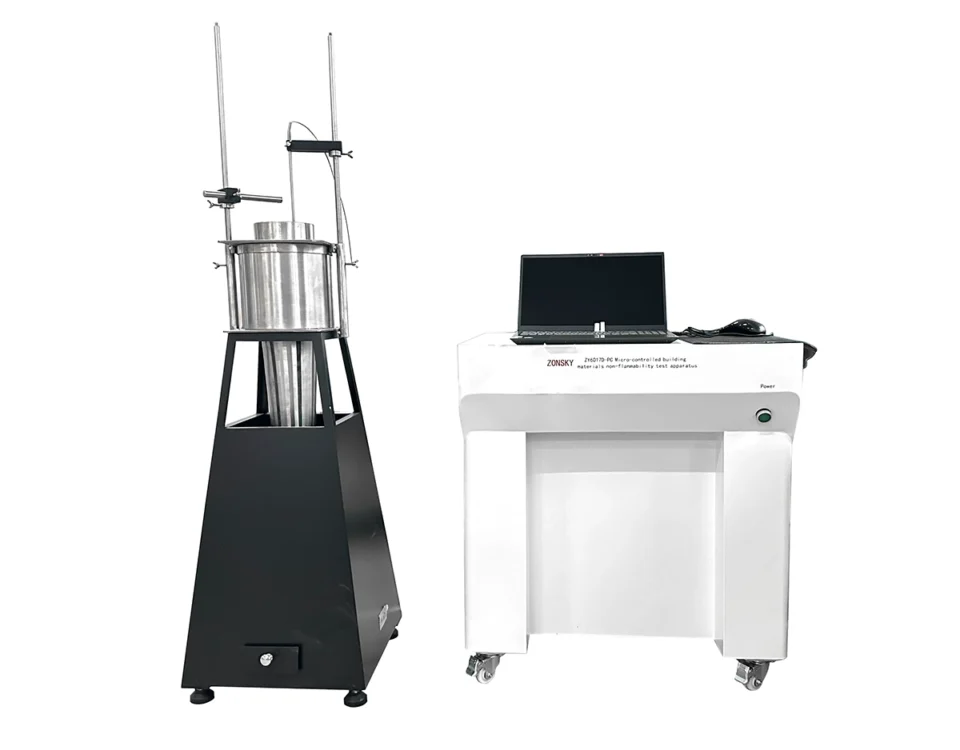
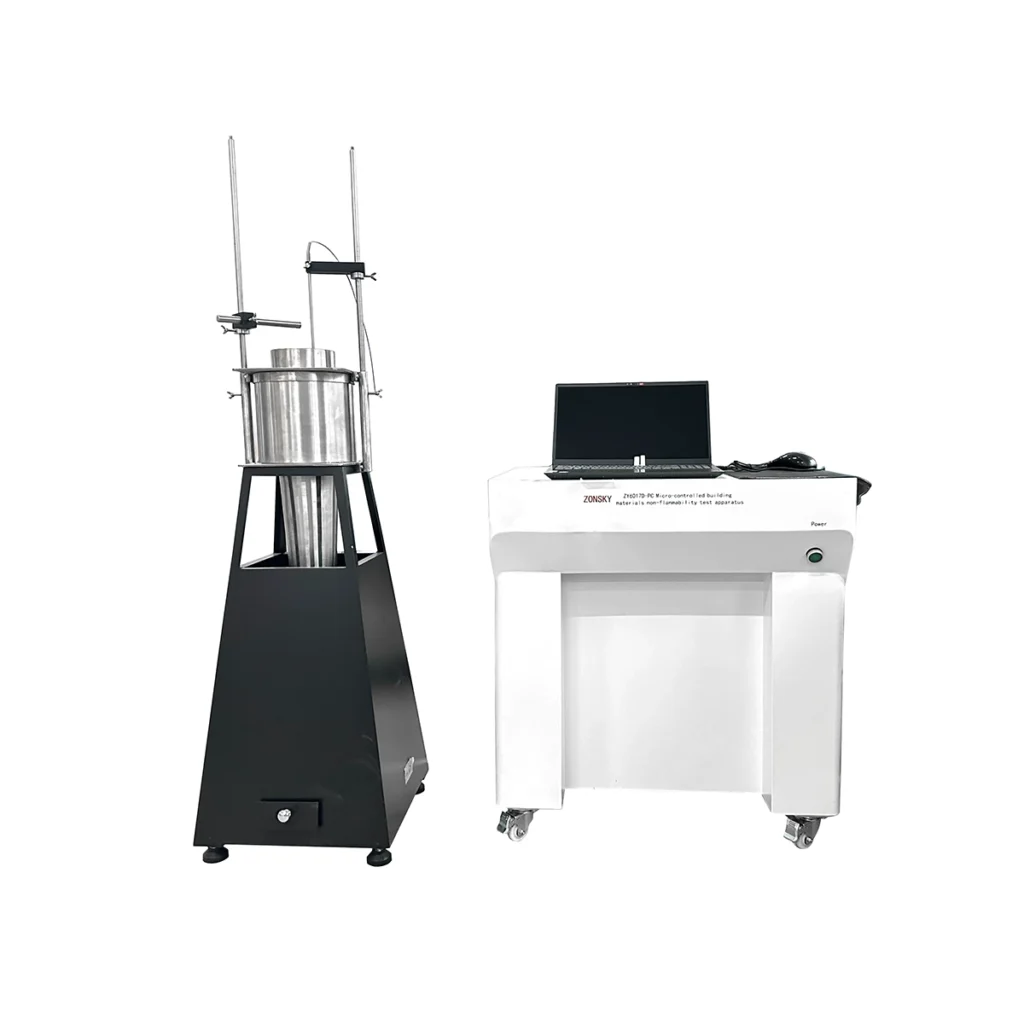
EN ISO 1182 (Non-combustibility Test): Tests homogeneous and main components of non-homogeneous materials using a vertical cylindrical furnace preheated to 750°C to verify non-combustible properties. Substrate materials comply with EN 13238.
EN ISO 1716 (Gross Calorific Value Test): Uses an oxygen bomb calorimeter to measure total heat release (PCS) of materials during combustion.
EN 13823 (Single Burning Item, SBI Test): Simulates real corner fire scenarios to test non-floor building products. Key measured parameters include Heat Release Rate Index (FIGRA), Smoke Generation Rate Index (SMOGRA), Total Heat Release over 600 seconds (THR600s), and Lateral Flame Spread (LFS).
EN ISO 11925-2 (Small Flame Test): Evaluates vertical sample flammability under direct small-flame impact without external radiation. Ignition time is 15s (for E grade) or 30s (for B/C/D grades), with a fixed 20mm flame height. B/C/D grades require combined SBI test results for final classification.
EN ISO 9239-1 (Floor Material Test): Determines CHF, maximum flame spread distance and smoke density via light transmission testing. S1 smoke grade requires smoke production ≤ 750%·min.
02. What is EN 13501-2?
EN 13501-2 specifies the fire resistance classification of building components (excluding ventilation systems). Unlike material fire reaction tests, it evaluates the ability of integral building elements to maintain core functional stability under sustained standard fire exposure.
2.1 Scope & Core Performance Indicators
(1) Application Scope
Covers all load-bearing and fire-separating building components except ventilation facilities:
Load-bearing elements: walls, floors, roofs, beams, columns, stairs
Fire separation elements: fire walls, fire floors, fire doors & roller shutters
Non-load-bearing elements: partition walls, curtain walls, suspended ceilings, fire blockings, pipe penetration seals
Fire protection systems: fire-resistant coatings, fire claddings, fire screens
(2) Three Core Fire Resistance Indicators
Grading is marked as RXX / EXX / IXX (XX = sustained time in minutes):
R (Load-bearing Capacity): Maintain structural stability without collapse or severe deformation.
E (Integrity): Prevent flame and hot flue gas penetration through cracks or gaps.
I (Insulation): Limit temperature rise on the unexposed surface (average ≤ 140°C; single point max ≤ 180°C).
Example: R60/E60/I60 means the component maintains full load-bearing, integrity and insulation performance for 60 minutes in standard fire conditions.
2.2 Test Methods & Classification Rules
(1) Standard Fire Resistance Test
Tests follow the ISO 834 standard temperature rise curve (reaching 843°C at 30 minutes). Load-bearing components are tested under simulated actual service loads. Performance is judged by R, E and I indicator criteria.
(2) Optional Smoke Tightness Test
Applied to components requiring smoke barrier performance (e.g., fire doors) to verify smoke penetration resistance.
(3) Grading System
REI X: Maintains R, E and I performance for X minutes (for load-bearing fire separation components).
EI X: Maintains E and I performance for X minutes (for non-load-bearing fire separation components).
Additional suffixes:
W: Complies with radiant heat flux limitation (for fire-resistant glass and transparent components).
S: Passes smoke tightness test for enhanced smoke barrier performance.
03. Core Differences Between EN 13501-1 and EN 13501-2
3.1 Core Definition & Focus
EN 13501-1 (Reaction to Fire): Evaluates material inherent combustion performance. Focuses on how building materials behave in the early stage of a fire (ignition, burning, heat and smoke release).
EN 13501-2 (Fire Resistance): Evaluates integrated component fire resistance. Focuses on whether finished building assemblies can resist fire damage and maintain structural & sealing functions under sustained fire exposure.
3.2 Test Objects
EN 13501-1: Raw materials and finished products – thermal insulation materials, boards, fire-resistant coatings, flooring, curtains, pipe coverings, etc.
EN 13501-2: Integrated building components – walls, floors, beams, columns, fire doors, fire shutters, fire blockings, etc.
3.3 Grading System
EN 13501-1 Combustion Grades: A1, A2, B, C, D, E, F Additional auxiliary grades: s0/s1/s2 (smoke production); d0/d1/d2 (burning droplets); t0/t1/t2 (heat release characteristics)
EN 13501-2 Fire Resistance Grades: Time-based combination of R/E/I indicators Common grades: REI30, REI60, REI90, EI30, R30, etc.
3.4 Simple Summary
EN 13501-1 tests whether a material is easy to catch fire.
EN 13501-2 tests whether a building component can hold fire back.
For European construction project bidding, material procurement and product customs clearance, manufacturers must confirm dual compliance of material fire reaction (EN 13501-1) and component fire resistance (EN 13501-2) based on actual product types and application scenarios.