Product Details

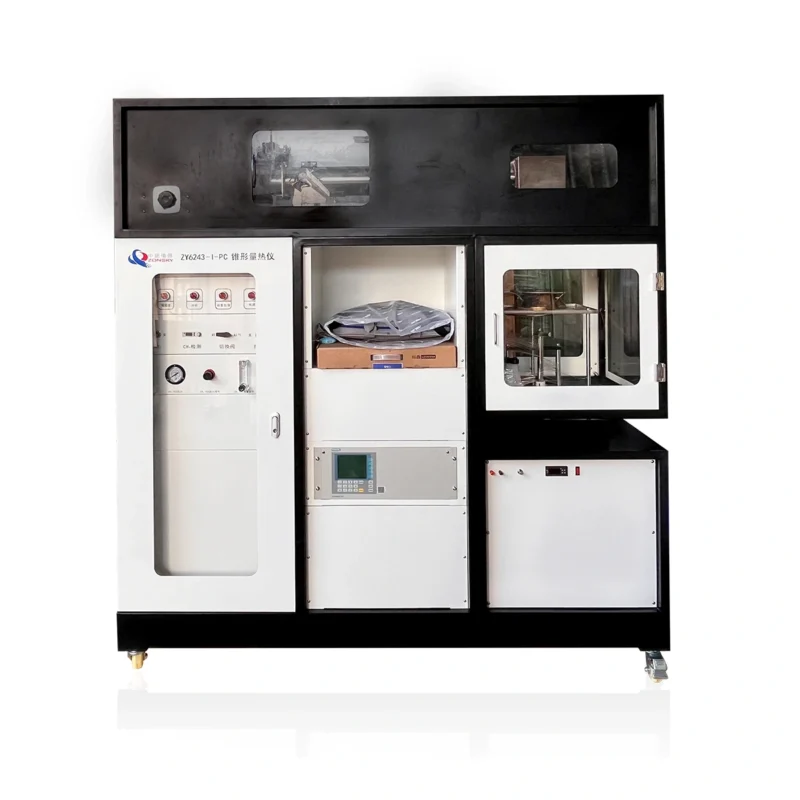
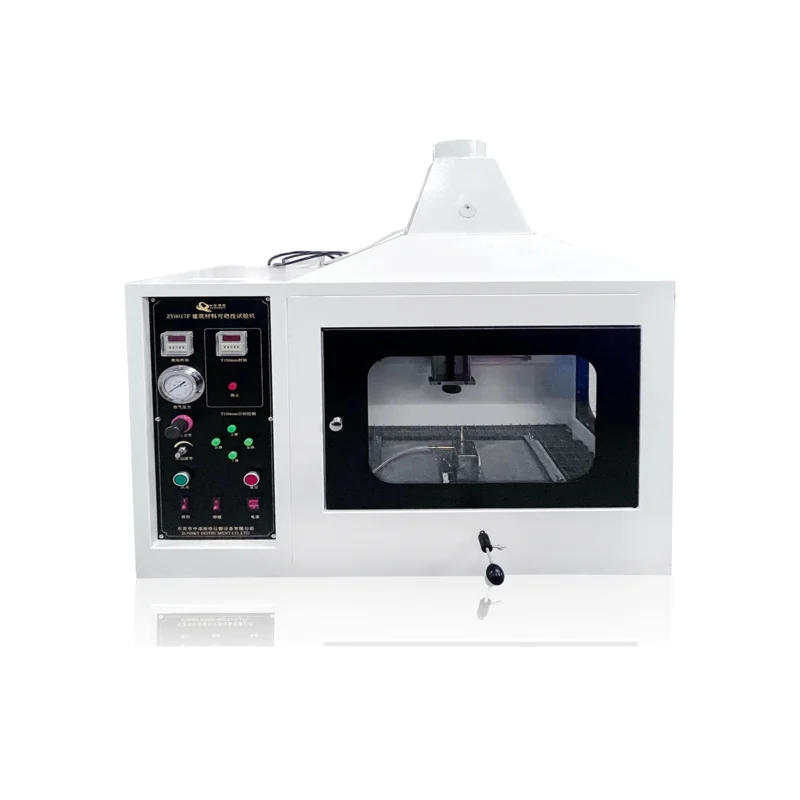
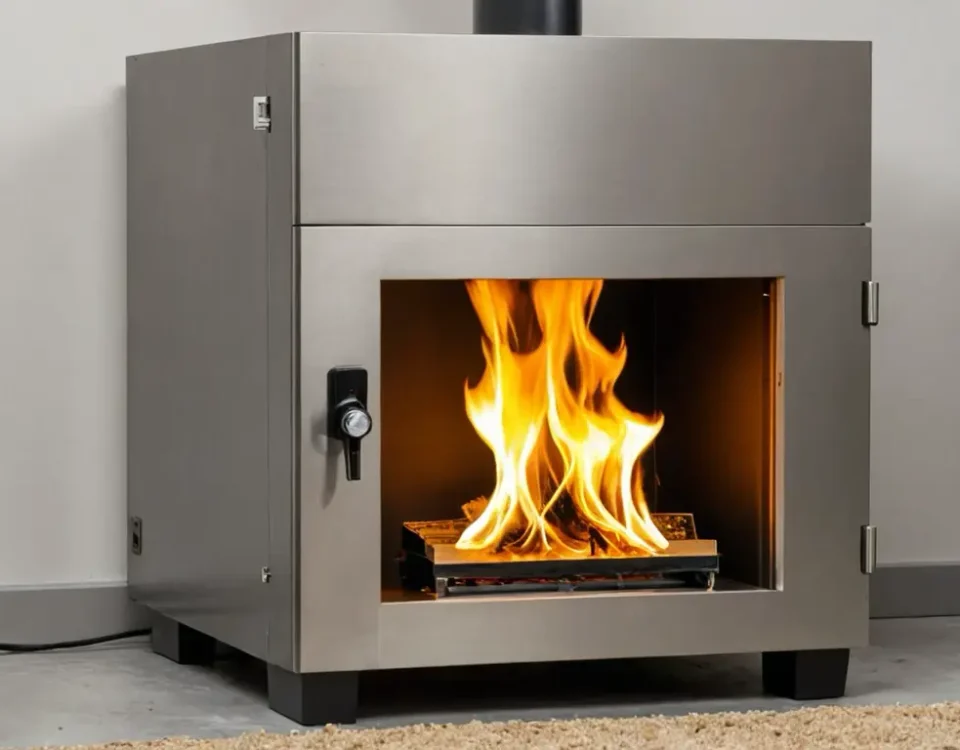
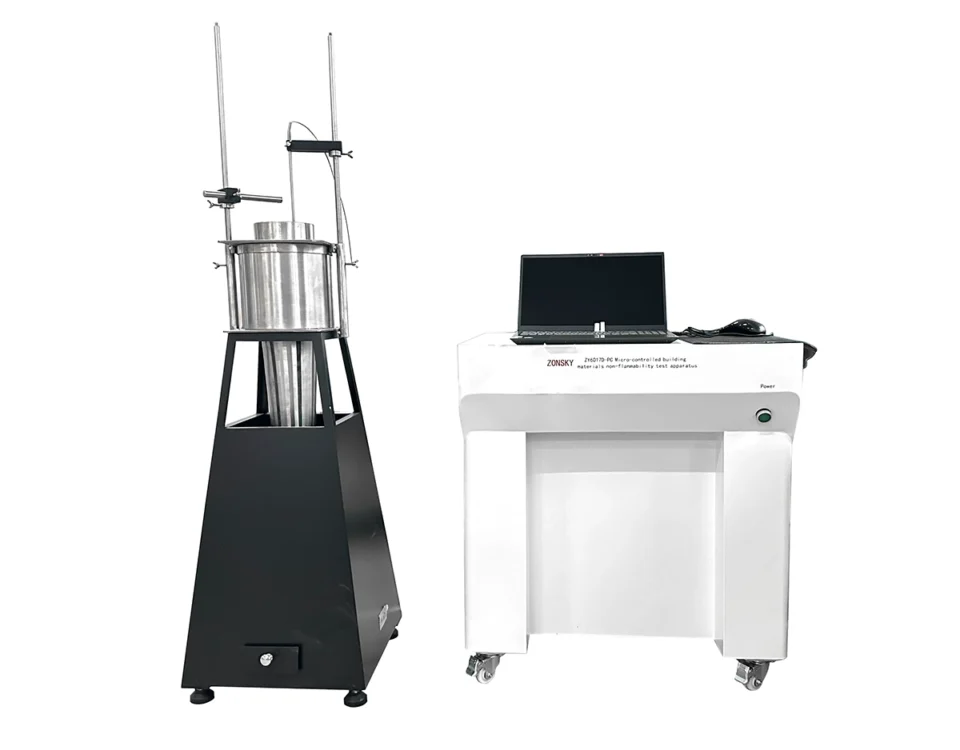
ZY6240 Difficult Flammability Tester
Brief Introduction
The ZONSKY Difficult Flammability Tester delivers high-performance analysis to prove your building materials can withstand severe fire conditions.
Highlights / Outstanding Features / Characteristics
- Extreme Fire Simulation: Subjects material samples to intense high temperatures, high heat fluxes, and realistic airflow conditions.
- Intelligent Automated Control: Features a smart control system that ensures ultra-precise temperature management and repeatable test environments.
- Advanced Data Management: Built-in software allows for effortless data tracking, logging, and export for streamlined quality control reporting.
- Regulatory Compliance: Designed specifically to verify material non-combustibility and satisfy strict construction fire safety standards.
Apparatus Details
In compliance with:
- DIN 4102
Device description
Purpose:
The main purpose of the fire resistance test device is to assess the fire resistance of building materials under fire conditions, and in particular, to detect changes in the performance of the materials under the action of heat and flame.
Structure:
The fire resistance test set typically consists of the following components:
- Test Chamber: An enclosed space where the building material to be tested is placed and fire conditions are simulated.
- Heating System: Used to generate high temperatures and heat flux in the test chamber to simulate the effects of heat radiation under fire conditions.
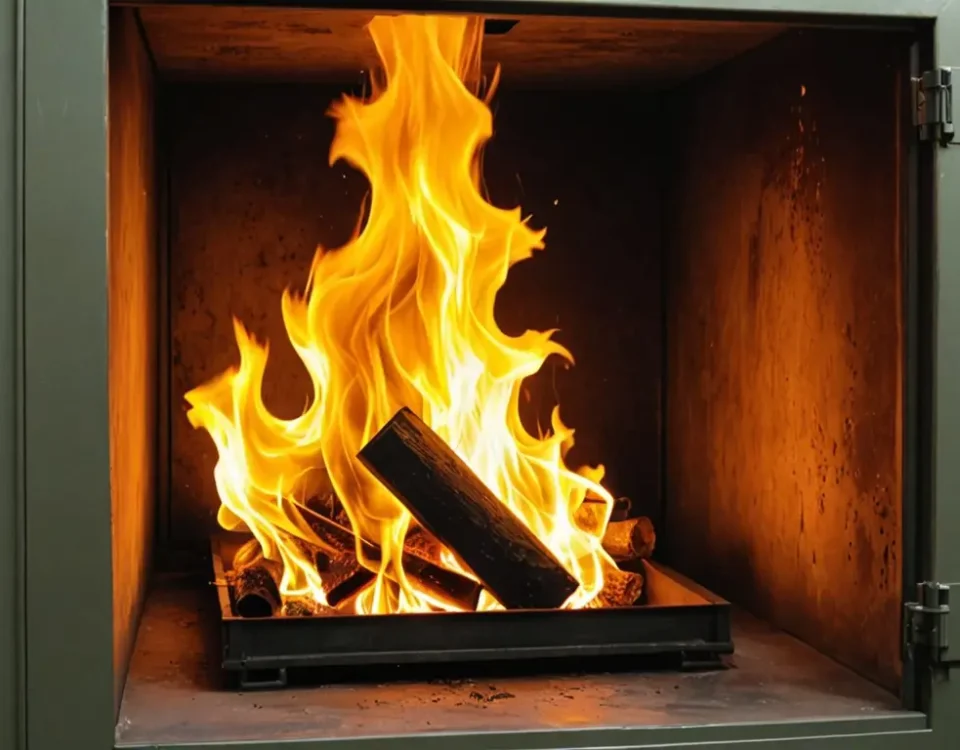
- Flame Source: Used to generate flames in the test chamber for direct flame exposure testing of building materials.
- Measurement and Monitoring System (MMS): Used to monitor and record data such as temperature, pressure, and flame propagation during the testing process to assess the fire resistance of building materials.
Test Procedure:
- Sample Preparation: The building materials to be tested are placed in the test chamber and prepared according to standard procedures to ensure that the test materials comply with the code requirements.
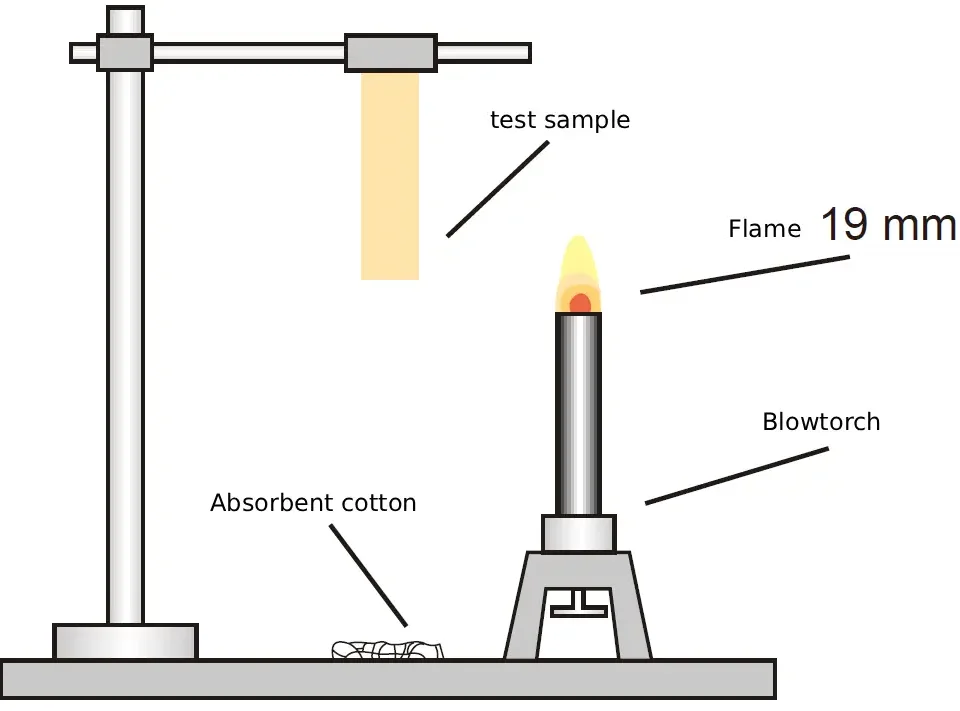
- Heating and Flame Exposure: The heating system and flame source are activated to generate high temperatures and flames in the test chamber. The building materials are tested by heating and direct flame exposure.
- Data Recording and Analysis: A measurement and monitoring system records data on various parameters during the testing process, including temperature, flame propagation, etc., to assess the fire resistance of the building materials.
Test Parameters:
Parameters typically considered for a fire resistance test setup include:
- Fire Resistance Time: The amount of time a building material is able to maintain its structural integrity and functionality under flame exposure, reflecting its fire resistance.
- Flame Spread Rate: The rate at which a flame spreads across the surface of a building material, used to assess the burning behavior of the building material.
Applications:
Flame resistance testing devices are widely used to assess the fire resistance of building materials and guide the development of materials that enhance fire safety measures in construction, fire engineering, material science, and other fields.
Advantages:
- Highly Controlled Testing: The testing process can be carried out in a standardized laboratory environment, ensuring the accuracy and reliability of the test results.
- Real-Time Data Collection: By monitoring flame behavior and flame propagation, the system can provide real-time data for a thorough evaluation of building materials.
-800x800.webp)